Sydney Nguyen - Nov. 9, 2025
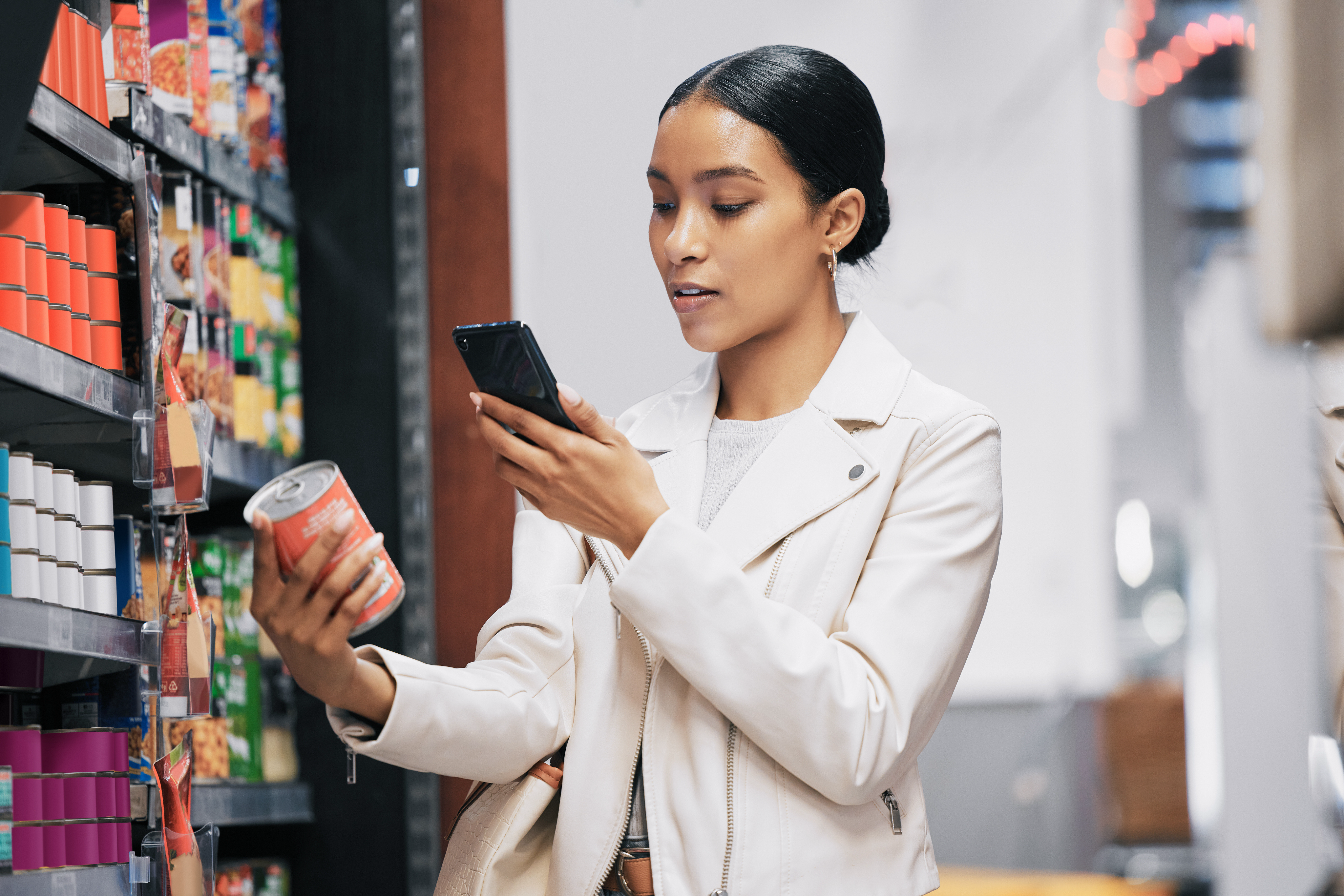
Being a food and beverage company and trying to connect with your customers can be difficult. It can be hard to grasp what is trending and what matters most to your target audience. Your customers are constantly changing and growing as people, and so is the smart packaging industry. Smart packaging is the best way to connect with your customers without having to take any major risks. Utilizing these technologies can elevate packaging and engage more customers.
Technology in the world is constantly improving and among that is smart packaging which is rapidly growing in popularity in the food and beverage industry. There are many ways to utilize smart packaging when designing food and beverage products; to further communicate details of ingredients and allergens, preserving shelf life of products to ensure they stay the best possible quality, and connecting with customers to have the best user experience. Ultimately, using smart packaging is the best way to elevate your product's design and create lasting customer experiences. Although it is not seen as much on the shelves at the moment we will start to see more companies using these technologies in every grocery store shelf.

- Nicasio, F. (2022, August 24). Everything to Know About Smart Packaging: Definition, Examples, and Tips. noissue. https://noissue.co/blog/everything-to-know-about-smart-packaging-definition-examples-and-tips/
- Edie. (2023, September 25). 11 Examples of Smart Packaging. Blue Bite. https://www.bluebite.com/brand-strategy/smart-packaging-examples
- Blue Bite. (n.d.). Vita Coco. Blue Bite.
- https://www.bluebite.com/case-studies/vita-coco
- Epac. (n.d). 5 Ways to Leverage QR Code Packaging to Boost Customer Engagement. Epac.
- https://epacflexibles.com/5-ways-to-leverage-qr-code-packaging-to-boost-customer-engagement/?srsltid=AfmBOopkb21trDeFmnAQENR5hJ2wUT17RRT9XkH88Y-K7LqSABZFKVKt
- Albertyn, R. (2024, November 13) Smart Packaging Examples: 12 Bands That Nailed It. QR Code Generator
- https://www.qr-code-generator.com/blog/smart-packaging-examples/
- Anabis. (2025, June 24) How Interactive Smart Packaging increases E-Commerce Sales. The Legacy Printing.
- https://www.thelegacyprinting.com/blog/how-interactive-smart-packaging-increase-e-commerce-sales/?srsltid=AfmBOoobPqi4vczLtptNVOcI8rXbfYct19PLvOwFK8Vw3OQpR3uLrq6F
- Macall, D. Williams, C. Gleim, S. Smyth, S. (2020, December 26) Canadian consumer opinions regarding food purchase decisions Science Direct.
- https://www.sciencedirect.com/science/article/pii/S266615432030079X
- Goverment of Canada. (2024, January 25) Canadian environmental sustainability shopping habits. Goverment of Canada
- https://agriculture.canada.ca/en/sector/consumer-trends-and-behaviours/canadian-environmental-sustainability-shopping-habits

Utilizing smart packaging technologies can be a major benefit for companies to connect with customers. Using connected technologies can help with informing allergens, finding defects, and improving customer engagement. When grocery shopping it can be hard for consumers who have special allergens and dietary restrictions to find food that is safe for them as it is not always accessible reading small labels. Many food and beverage companies have started utilizing these technologies like QR codes that customers can scan to get further information they may need. When the QR codes are scanned information of where the ingredients were sourced, nutritional facts, and contact information for further inquiries are found. A current example of using QR codes to give this information is the Hershey company. They have put these QR codes to show nutritional facts, allergen information, and company details on their Hershey Kisses chocolate. Since they have so many different flavours it can be hard for customers to identify what is safe for them to eat with certain dietary restrictions but with the QR codes it makes it much easier for customers to find what fits their needs. Napolina is another company who uses QR codes but in another way, they use it to show transparency on where their tomatoes are sourced. Having complete transparency of where their ingredients are sourced creates trust with the customers and a stronger company to consumer relationship. Many customers feel more inclined to purchasing products that have that transparency as they are more knowledgeable on what they are consuming. Another amazing use of QR codes is also to give individual products a special identifier with that if a product needs to be recalled they can identify which ones exactly need to be recalled rather than a mass recall. This will help with limiting food waste and inconveniences to customers. Customer engagement is one of the most used reasons why companies use smart packaging. Having an interactive component can be the reason why a customer chooses your product over the competing brand. Embedding QR codes or NFC tags in your packaging design can elevate your product to feel more special for the customer. Vita coconut water uses QR codes on their individual bottles of coconut water. When the QR code is scanned you can get coupons for more products and read their sustainability initiatives. Providing information about sustainability efforts can make a customer inclined to buy as they feel like they are helping the planet. According to Agriculture Canada 8 in 10 Canadians value a sustainable lifestyle and 70% seek foods with environmentally sustainable production (Government of Canada, 2024) Additionally another example of companies using smart technologies is Nutella and Barilla using QR codes to share recipes using their products. Doing this creates meaningful connections with customers as they feel more connected after following the recipe. Many customers create positive memories during the cooking process which associate with the brand leaving a lasting impression in their heads.
QR codes are one of the easiest ways to connect with customers but an alternative way is to use NFC tags. NFC tags are the sophisticated sister to QR codes in the smart packaging industry. They are small chips that wirelessly communicate with smartphones when in close proximity such as being tapped. NFC tags can share the same information as QR codes but also have a few more beneficial uses such as authentication and enhanced customer experiences. Olive oil is a highly counterfeit item in the food industry to solve the question of legitimacy Buonamici the italian olive oil company has integrated NFC tags to prove the authenticity of the oil and enhance consumer engagement. When a customer taps their phone in the bottle it will show a proof of authenticity as well as where the ingredients are sourced. Nespresso is another company who has taken NFC tags to another level. Using these tags on all of their product’s packaging, customers can seamlessly drop their items in a bin and with the smart technologies the checkout will identify what is being purchased without needing to scan anything. This not only elevates the customer experience by feeling more luxurious but this also helps those who are on the go and need to buy their items quickly. Nespresso knows who their customers are and how to better elevate their lives. What may look like a small gesture is what keeps customers coming back and a positive image in their heads.

Smart packaging is a type of product packaging that uses interactive technology such as QR (Quick Response) codes or NFC tags to improve customer experience as well as keep transparency in the supply chain for consumers. Smart packaging is divided into three categories: intelligent, connected, and active packaging. Intelligent packaging is a form of packaging that monitors and communicates information of the product's condition. The most used technologies in intelligent packaging are Radio Frequency Identification (RFID) tags as well as near field communication (NFC) tags. These technologies provide real time information of the product's condition such as temperature, freshness, storage conditions, and can even alert the manufacturers if there are any issues in product quality. Connected packaging is a category that specifically uses packaging technology to create digital content and truly be the bridge to connect brands and customers with their products. When using QR codes or NFC tags companies create an interactive component to their product which enhances customer engagement and builds meaningful connections with customers. Many companies create surveys or mini quizzes and event recipes to interact with customers to gain information on consumer habits and current trends. Active packaging is a type of packaging that interacts with the product or the environment that it is in to maintain the quality as well as extend the shelf life. These technologies are used to preserve freshness of the product throughout the supply chain ensuring the highest quality. Active packaging is very valuable when it comes to perishable goods and pharmaceuticals. Smart packaging as a whole is rapidly growing in this industry. In 2020 smart packaging is valued at 38.16 USD billion dollars and is expected to grow 4.15% annually to reach 48.72 USD billion dollars by 2026. (Anabis, 2025)


Back to Blog List




Sydney Nguyen - Nov. 9, 2025

Back to Blog List
Being a food and beverage company and trying to connect with your customers can be difficult. It can be hard to grasp what is trending and what matters most to your target audience. Your customers are constantly changing and growing as people, and so is the smart packaging industry. Smart packaging is the best way to connect with your customers without having to take any major risks. Utilizing these technologies can elevate packaging and engage more customers.
Technology in the world is constantly improving and among that is smart packaging which is rapidly growing in popularity in the food and beverage industry. There are many ways to utilize smart packaging when designing food and beverage products; to further communicate details of ingredients and allergens, preserving shelf life of products to ensure they stay the best possible quality, and connecting with customers to have the best user experience. Ultimately, using smart packaging is the best way to elevate your product's design and create lasting customer experiences. Although it is not seen as much on the shelves at the moment we will start to see more companies using these technologies in every grocery store shelf.

- Nicasio, F. (2022, August 24). Everything to Know About Smart Packaging: Definition, Examples, and Tips. noissue. https://noissue.co/blog/everything-to-know-about-smart-packaging-definition-examples-and-tips/
- Edie. (2023, September 25). 11 Examples of Smart Packaging. Blue Bite. https://www.bluebite.com/brand-strategy/smart-packaging-examples
- Blue Bite. (n.d.). Vita Coco. Blue Bite.
- https://www.bluebite.com/case-studies/vita-coco
- Epac. (n.d). 5 Ways to Leverage QR Code Packaging to Boost Customer Engagement. Epac.
- https://epacflexibles.com/5-ways-to-leverage-qr-code-packaging-to-boost-customer-engagement/?srsltid=AfmBOopkb21trDeFmnAQENR5hJ2wUT17RRT9XkH88Y-K7LqSABZFKVKt
- Albertyn, R. (2024, November 13) Smart Packaging Examples: 12 Bands That Nailed It. QR Code Generator
- https://www.qr-code-generator.com/blog/smart-packaging-examples/
- Anabis. (2025, June 24) How Interactive Smart Packaging increases E-Commerce Sales. The Legacy Printing.
- https://www.thelegacyprinting.com/blog/how-interactive-smart-packaging-increase-e-commerce-sales/?srsltid=AfmBOoobPqi4vczLtptNVOcI8rXbfYct19PLvOwFK8Vw3OQpR3uLrq6F
- Macall, D. Williams, C. Gleim, S. Smyth, S. (2020, December 26) Canadian consumer opinions regarding food purchase decisions Science Direct.
- https://www.sciencedirect.com/science/article/pii/S266615432030079X
- Goverment of Canada. (2024, January 25) Canadian environmental sustainability shopping habits. Goverment of Canada
- https://agriculture.canada.ca/en/sector/consumer-trends-and-behaviours/canadian-environmental-sustainability-shopping-habits

Utilizing smart packaging technologies can be a major benefit for companies to connect with customers. Using connected technologies can help with informing allergens, finding defects, and improving customer engagement. When grocery shopping it can be hard for consumers who have special allergens and dietary restrictions to find food that is safe for them as it is not always accessible reading small labels. Many food and beverage companies have started utilizing these technologies like QR codes that customers can scan to get further information they may need. When the QR codes are scanned information of where the ingredients were sourced, nutritional facts, and contact information for further inquiries are found. A current example of using QR codes to give this information is the Hershey company. They have put these QR codes to show nutritional facts, allergen information, and company details on their Hershey Kisses chocolate. Since they have so many different flavours it can be hard for customers to identify what is safe for them to eat with certain dietary restrictions but with the QR codes it makes it much easier for customers to find what fits their needs. Napolina is another company who uses QR codes but in another way, they use it to show transparency on where their tomatoes are sourced. Having complete transparency of where their ingredients are sourced creates trust with the customers and a stronger company to consumer relationship. Many customers feel more inclined to purchasing products that have that transparency as they are more knowledgeable on what they are consuming. Another amazing use of QR codes is also to give individual products a special identifier with that if a product needs to be recalled they can identify which ones exactly need to be recalled rather than a mass recall. This will help with limiting food waste and inconveniences to customers. Customer engagement is one of the most used reasons why companies use smart packaging. Having an interactive component can be the reason why a customer chooses your product over the competing brand. Embedding QR codes or NFC tags in your packaging design can elevate your product to feel more special for the customer. Vita coconut water uses QR codes on their individual bottles of coconut water. When the QR code is scanned you can get coupons for more products and read their sustainability initiatives. Providing information about sustainability efforts can make a customer inclined to buy as they feel like they are helping the planet. According to Agriculture Canada 8 in 10 Canadians value a sustainable lifestyle and 70% seek foods with environmentally sustainable production (Government of Canada, 2024) Additionally another example of companies using smart technologies is Nutella and Barilla using QR codes to share recipes using their products. Doing this creates meaningful connections with customers as they feel more connected after following the recipe. Many customers create positive memories during the cooking process which associate with the brand leaving a lasting impression in their heads.
QR codes are one of the easiest ways to connect with customers but an alternative way is to use NFC tags. NFC tags are the sophisticated sister to QR codes in the smart packaging industry. They are small chips that wirelessly communicate with smartphones when in close proximity such as being tapped. NFC tags can share the same information as QR codes but also have a few more beneficial uses such as authentication and enhanced customer experiences. Olive oil is a highly counterfeit item in the food industry to solve the question of legitimacy Buonamici the italian olive oil company has integrated NFC tags to prove the authenticity of the oil and enhance consumer engagement. When a customer taps their phone in the bottle it will show a proof of authenticity as well as where the ingredients are sourced. Nespresso is another company who has taken NFC tags to another level. Using these tags on all of their product’s packaging, customers can seamlessly drop their items in a bin and with the smart technologies the checkout will identify what is being purchased without needing to scan anything. This not only elevates the customer experience by feeling more luxurious but this also helps those who are on the go and need to buy their items quickly. Nespresso knows who their customers are and how to better elevate their lives. What may look like a small gesture is what keeps customers coming back and a positive image in their heads.

Smart packaging is a type of product packaging that uses interactive technology such as QR (Quick Response) codes or NFC tags to improve customer experience as well as keep transparency in the supply chain for consumers. Smart packaging is divided into three categories: intelligent, connected, and active packaging. Intelligent packaging is a form of packaging that monitors and communicates information of the product's condition. The most used technologies in intelligent packaging are Radio Frequency Identification (RFID) tags as well as near field communication (NFC) tags. These technologies provide real time information of the product's condition such as temperature, freshness, storage conditions, and can even alert the manufacturers if there are any issues in product quality. Connected packaging is a category that specifically uses packaging technology to create digital content and truly be the bridge to connect brands and customers with their products. When using QR codes or NFC tags companies create an interactive component to their product which enhances customer engagement and builds meaningful connections with customers. Many companies create surveys or mini quizzes and event recipes to interact with customers to gain information on consumer habits and current trends. Active packaging is a type of packaging that interacts with the product or the environment that it is in to maintain the quality as well as extend the shelf life. These technologies are used to preserve freshness of the product throughout the supply chain ensuring the highest quality. Active packaging is very valuable when it comes to perishable goods and pharmaceuticals. Smart packaging as a whole is rapidly growing in this industry. In 2020 smart packaging is valued at 38.16 USD billion dollars and is expected to grow 4.15% annually to reach 48.72 USD billion dollars by 2026. (Anabis, 2025)




Connective.thecompany@gmail.com
125 Bond St, Toronto, ON M5B 1Y2


Sydney Nguyen - Nov. 9, 2025

Back to Blog List
Being a food and beverage company and trying to connect with your customers can be difficult. It can be hard to grasp what is trending and what matters most to your target audience. Your customers are constantly changing and growing as people, and so is the smart packaging industry. Smart packaging is the best way to connect with your customers without having to take any major risks. Utilizing these technologies can elevate packaging and engage more customers.
Technology in the world is constantly improving and among that is smart packaging which is rapidly growing in popularity in the food and beverage industry. There are many ways to utilize smart packaging when designing food and beverage products; to further communicate details of ingredients and allergens, preserving shelf life of products to ensure they stay the best possible quality, and connecting with customers to have the best user experience. Ultimately, using smart packaging is the best way to elevate your product's design and create lasting customer experiences. Although it is not seen as much on the shelves at the moment we will start to see more companies using these technologies in every grocery store shelf.

- Nicasio, F. (2022, August 24). Everything to Know About Smart Packaging: Definition, Examples, and Tips. noissue. https://noissue.co/blog/everything-to-know-about-smart-packaging-definition-examples-and-tips/
- Edie. (2023, September 25). 11 Examples of Smart Packaging. Blue Bite. https://www.bluebite.com/brand-strategy/smart-packaging-examples
- Blue Bite. (n.d.). Vita Coco. Blue Bite.
- https://www.bluebite.com/case-studies/vita-coco
- Epac. (n.d). 5 Ways to Leverage QR Code Packaging to Boost Customer Engagement. Epac.
- https://epacflexibles.com/5-ways-to-leverage-qr-code-packaging-to-boost-customer-engagement/?srsltid=AfmBOopkb21trDeFmnAQENR5hJ2wUT17RRT9XkH88Y-K7LqSABZFKVKt
- Albertyn, R. (2024, November 13) Smart Packaging Examples: 12 Bands That Nailed It. QR Code Generator
- https://www.qr-code-generator.com/blog/smart-packaging-examples/
- Anabis. (2025, June 24) How Interactive Smart Packaging increases E-Commerce Sales. The Legacy Printing.
- https://www.thelegacyprinting.com/blog/how-interactive-smart-packaging-increase-e-commerce-sales/?srsltid=AfmBOoobPqi4vczLtptNVOcI8rXbfYct19PLvOwFK8Vw3OQpR3uLrq6F
- Macall, D. Williams, C. Gleim, S. Smyth, S. (2020, December 26) Canadian consumer opinions regarding food purchase decisions Science Direct.
- https://www.sciencedirect.com/science/article/pii/S266615432030079X
- Goverment of Canada. (2024, January 25) Canadian environmental sustainability shopping habits. Goverment of Canada
- https://agriculture.canada.ca/en/sector/consumer-trends-and-behaviours/canadian-environmental-sustainability-shopping-habits

Utilizing smart packaging technologies can be a major benefit for companies to connect with customers. Using connected technologies can help with informing allergens, finding defects, and improving customer engagement. When grocery shopping it can be hard for consumers who have special allergens and dietary restrictions to find food that is safe for them as it is not always accessible reading small labels. Many food and beverage companies have started utilizing these technologies like QR codes that customers can scan to get further information they may need. When the QR codes are scanned information of where the ingredients were sourced, nutritional facts, and contact information for further inquiries are found. A current example of using QR codes to give this information is the Hershey company. They have put these QR codes to show nutritional facts, allergen information, and company details on their Hershey Kisses chocolate. Since they have so many different flavours it can be hard for customers to identify what is safe for them to eat with certain dietary restrictions but with the QR codes it makes it much easier for customers to find what fits their needs. Napolina is another company who uses QR codes but in another way, they use it to show transparency on where their tomatoes are sourced. Having complete transparency of where their ingredients are sourced creates trust with the customers and a stronger company to consumer relationship. Many customers feel more inclined to purchasing products that have that transparency as they are more knowledgeable on what they are consuming. Another amazing use of QR codes is also to give individual products a special identifier with that if a product needs to be recalled they can identify which ones exactly need to be recalled rather than a mass recall. This will help with limiting food waste and inconveniences to customers. Customer engagement is one of the most used reasons why companies use smart packaging. Having an interactive component can be the reason why a customer chooses your product over the competing brand. Embedding QR codes or NFC tags in your packaging design can elevate your product to feel more special for the customer. Vita coconut water uses QR codes on their individual bottles of coconut water. When the QR code is scanned you can get coupons for more products and read their sustainability initiatives. Providing information about sustainability efforts can make a customer inclined to buy as they feel like they are helping the planet. According to Agriculture Canada 8 in 10 Canadians value a sustainable lifestyle and 70% seek foods with environmentally sustainable production (Government of Canada, 2024) Additionally another example of companies using smart technologies is Nutella and Barilla using QR codes to share recipes using their products. Doing this creates meaningful connections with customers as they feel more connected after following the recipe. Many customers create positive memories during the cooking process which associate with the brand leaving a lasting impression in their heads.
QR codes are one of the easiest ways to connect with customers but an alternative way is to use NFC tags. NFC tags are the sophisticated sister to QR codes in the smart packaging industry. They are small chips that wirelessly communicate with smartphones when in close proximity such as being tapped. NFC tags can share the same information as QR codes but also have a few more beneficial uses such as authentication and enhanced customer experiences. Olive oil is a highly counterfeit item in the food industry to solve the question of legitimacy Buonamici the italian olive oil company has integrated NFC tags to prove the authenticity of the oil and enhance consumer engagement. When a customer taps their phone in the bottle it will show a proof of authenticity as well as where the ingredients are sourced. Nespresso is another company who has taken NFC tags to another level. Using these tags on all of their product’s packaging, customers can seamlessly drop their items in a bin and with the smart technologies the checkout will identify what is being purchased without needing to scan anything. This not only elevates the customer experience by feeling more luxurious but this also helps those who are on the go and need to buy their items quickly. Nespresso knows who their customers are and how to better elevate their lives. What may look like a small gesture is what keeps customers coming back and a positive image in their heads.

Smart packaging is a type of product packaging that uses interactive technology such as QR (Quick Response) codes or NFC tags to improve customer experience as well as keep transparency in the supply chain for consumers. Smart packaging is divided into three categories: intelligent, connected, and active packaging. Intelligent packaging is a form of packaging that monitors and communicates information of the product's condition. The most used technologies in intelligent packaging are Radio Frequency Identification (RFID) tags as well as near field communication (NFC) tags. These technologies provide real time information of the product's condition such as temperature, freshness, storage conditions, and can even alert the manufacturers if there are any issues in product quality. Connected packaging is a category that specifically uses packaging technology to create digital content and truly be the bridge to connect brands and customers with their products. When using QR codes or NFC tags companies create an interactive component to their product which enhances customer engagement and builds meaningful connections with customers. Many companies create surveys or mini quizzes and event recipes to interact with customers to gain information on consumer habits and current trends. Active packaging is a type of packaging that interacts with the product or the environment that it is in to maintain the quality as well as extend the shelf life. These technologies are used to preserve freshness of the product throughout the supply chain ensuring the highest quality. Active packaging is very valuable when it comes to perishable goods and pharmaceuticals. Smart packaging as a whole is rapidly growing in this industry. In 2020 smart packaging is valued at 38.16 USD billion dollars and is expected to grow 4.15% annually to reach 48.72 USD billion dollars by 2026. (Anabis, 2025)






Connective.thecompany@gmail.com
125 Bond St, Toronto, ON M5B 1Y2







Sydney Nguyen - Nov. 9, 2025
Back to Blog List
Being a food and beverage company and trying to connect with your customers can be difficult. It can be hard to grasp what is trending and what matters most to your target audience. Your customers are constantly changing and growing as people, and so is the smart packaging industry. Smart packaging is the best way to connect with your customers without having to take any major risks. Utilizing these technologies can elevate packaging and engage more customers.
Technology in the world is constantly improving and among that is smart packaging which is rapidly growing in popularity in the food and beverage industry. There are many ways to utilize smart packaging when designing food and beverage products; to further communicate details of ingredients and allergens, preserving shelf life of products to ensure they stay the best possible quality, and connecting with customers to have the best user experience. Ultimately, using smart packaging is the best way to elevate your product's design and create lasting customer experiences. Although it is not seen as much on the shelves at the moment we will start to see more companies using these technologies in every grocery store shelf.
- Nicasio, F. (2022, August 24). Everything to Know About Smart Packaging: Definition, Examples, and Tips. noissue. https://noissue.co/blog/everything-to-know-about-smart-packaging-definition-examples-and-tips/
- Edie. (2023, September 25). 11 Examples of Smart Packaging. Blue Bite. https://www.bluebite.com/brand-strategy/smart-packaging-examples
- Blue Bite. (n.d.). Vita Coco. Blue Bite.
- https://www.bluebite.com/case-studies/vita-coco
- Epac. (n.d). 5 Ways to Leverage QR Code Packaging to Boost Customer Engagement. Epac.
- https://epacflexibles.com/5-ways-to-leverage-qr-code-packaging-to-boost-customer-engagement/?srsltid=AfmBOopkb21trDeFmnAQENR5hJ2wUT17RRT9XkH88Y-K7LqSABZFKVKt
- Albertyn, R. (2024, November 13) Smart Packaging Examples: 12 Bands That Nailed It. QR Code Generator
- https://www.qr-code-generator.com/blog/smart-packaging-examples/
- Anabis. (2025, June 24) How Interactive Smart Packaging increases E-Commerce Sales. The Legacy Printing.
- https://www.thelegacyprinting.com/blog/how-interactive-smart-packaging-increase-e-commerce-sales/?srsltid=AfmBOoobPqi4vczLtptNVOcI8rXbfYct19PLvOwFK8Vw3OQpR3uLrq6F
- Macall, D. Williams, C. Gleim, S. Smyth, S. (2020, December 26) Canadian consumer opinions regarding food purchase decisions Science Direct.
- https://www.sciencedirect.com/science/article/pii/S266615432030079X
- Goverment of Canada. (2024, January 25) Canadian environmental sustainability shopping habits. Goverment of Canada
- https://agriculture.canada.ca/en/sector/consumer-trends-and-behaviours/canadian-environmental-sustainability-shopping-habits
Utilizing smart packaging technologies can be a major benefit for companies to connect with customers. Using connected technologies can help with informing allergens, finding defects, and improving customer engagement. When grocery shopping it can be hard for consumers who have special allergens and dietary restrictions to find food that is safe for them as it is not always accessible reading small labels. Many food and beverage companies have started utilizing these technologies like QR codes that customers can scan to get further information they may need. When the QR codes are scanned information of where the ingredients were sourced, nutritional facts, and contact information for further inquiries are found. A current example of using QR codes to give this information is the Hershey company. They have put these QR codes to show nutritional facts, allergen information, and company details on their Hershey Kisses chocolate. Since they have so many different flavours it can be hard for customers to identify what is safe for them to eat with certain dietary restrictions but with the QR codes it makes it much easier for customers to find what fits their needs. Napolina is another company who uses QR codes but in another way, they use it to show transparency on where their tomatoes are sourced. Having complete transparency of where their ingredients are sourced creates trust with the customers and a stronger company to consumer relationship. Many customers feel more inclined to purchasing products that have that transparency as they are more knowledgeable on what they are consuming. Another amazing use of QR codes is also to give individual products a special identifier with that if a product needs to be recalled they can identify which ones exactly need to be recalled rather than a mass recall. This will help with limiting food waste and inconveniences to customers. Customer engagement is one of the most used reasons why companies use smart packaging. Having an interactive component can be the reason why a customer chooses your product over the competing brand. Embedding QR codes or NFC tags in your packaging design can elevate your product to feel more special for the customer. Vita coconut water uses QR codes on their individual bottles of coconut water. When the QR code is scanned you can get coupons for more products and read their sustainability initiatives. Providing information about sustainability efforts can make a customer inclined to buy as they feel like they are helping the planet. According to Agriculture Canada 8 in 10 Canadians value a sustainable lifestyle and 70% seek foods with environmentally sustainable production (Government of Canada, 2024) Additionally another example of companies using smart technologies is Nutella and Barilla using QR codes to share recipes using their products. Doing this creates meaningful connections with customers as they feel more connected after following the recipe. Many customers create positive memories during the cooking process which associate with the brand leaving a lasting impression in their heads.
QR codes are one of the easiest ways to connect with customers but an alternative way is to use NFC tags. NFC tags are the sophisticated sister to QR codes in the smart packaging industry. They are small chips that wirelessly communicate with smartphones when in close proximity such as being tapped. NFC tags can share the same information as QR codes but also have a few more beneficial uses such as authentication and enhanced customer experiences. Olive oil is a highly counterfeit item in the food industry to solve the question of legitimacy Buonamici the italian olive oil company has integrated NFC tags to prove the authenticity of the oil and enhance consumer engagement. When a customer taps their phone in the bottle it will show a proof of authenticity as well as where the ingredients are sourced. Nespresso is another company who has taken NFC tags to another level. Using these tags on all of their product’s packaging, customers can seamlessly drop their items in a bin and with the smart technologies the checkout will identify what is being purchased without needing to scan anything. This not only elevates the customer experience by feeling more luxurious but this also helps those who are on the go and need to buy their items quickly. Nespresso knows who their customers are and how to better elevate their lives. What may look like a small gesture is what keeps customers coming back and a positive image in their heads.
Smart packaging is a type of product packaging that uses interactive technology such as QR (Quick Response) codes or NFC tags to improve customer experience as well as keep transparency in the supply chain for consumers. Smart packaging is divided into three categories: intelligent, connected, and active packaging. Intelligent packaging is a form of packaging that monitors and communicates information of the product's condition. The most used technologies in intelligent packaging are Radio Frequency Identification (RFID) tags as well as near field communication (NFC) tags. These technologies provide real time information of the product's condition such as temperature, freshness, storage conditions, and can even alert the manufacturers if there are any issues in product quality. Connected packaging is a category that specifically uses packaging technology to create digital content and truly be the bridge to connect brands and customers with their products. When using QR codes or NFC tags companies create an interactive component to their product which enhances customer engagement and builds meaningful connections with customers. Many companies create surveys or mini quizzes and event recipes to interact with customers to gain information on consumer habits and current trends. Active packaging is a type of packaging that interacts with the product or the environment that it is in to maintain the quality as well as extend the shelf life. These technologies are used to preserve freshness of the product throughout the supply chain ensuring the highest quality. Active packaging is very valuable when it comes to perishable goods and pharmaceuticals. Smart packaging as a whole is rapidly growing in this industry. In 2020 smart packaging is valued at 38.16 USD billion dollars and is expected to grow 4.15% annually to reach 48.72 USD billion dollars by 2026. (Anabis, 2025)




Connective.thecompany@gmail.com
125 Bond St, Toronto, ON M5B 1Y2

