Joshua Viar - Nov. 2, 2025

What if you could trace every bite of your food back to its origin? Track it down to the exact farm, country, or fishing boat it came from? These are questions companies need to consider as global supply chains grow increasingly complex. Knowing where our food is sourced from has become surprisingly difficult as outbreaks of contamination within farms, food fraud, and mislabeled products have compromised the public’s trust. Enter blockchain technology. This new innovation, synonymous with cryptocurrency, is now being used to rebuild transparency from the ground up by providing real-time tracking and faster responses when something goes wrong.
Blockchain technology is transforming food traceability by bringing unmatched speed, transparency, and security to the supply chain management. By looking at how the success in implementation of blockchain traceability has been for industry leaders like IBM, Nestlé, and Walmart, it shows that this technology has the potential value that can change the landscape of how food companies can operate in the future. With capabilities of being able to prevent disaster with faster recalls via a quick scan, companies will be able to prevent mass amounts of financial loss. Its ability to reduce tracing time from days to seconds while keeping records “tamper-proof” solves major challenges in food safety, consumer trust, and efficiency. Ultimately, blockchain offers the foundation for a more transparent and trustworthy global food system and as technological expertise expands in society, blockchain will likely shift from a competitive advantage to an industry standard.

- Belski, V., & Taului, D. (ca. 2025). Blockchain in the Food Supply Chain. ScienceSoft.
- https://www.scnsoft.com/blockchain/food-supply-chain
- Daley, S. (2023, March 22). Blockchain for Food: 10 Examples to Know. Built In.
- https://builtin.com/blockchain/food-safety-supply-chain
- IBM. (2021, February 22). Majid Al Futtaim Taps IBM Food Trust to Deliver Food Traceability
- Across Carrefour Stores Using Blockchain Technology. IBM Newsroom. https://newsroom.ibm.com/2021-02-22-Majid-Al-Futtaim-Taps-IBM-Food-Trust-to-Deliver-Food-Traceability-Across-Carrefour-Stores-Using-Blockchain-Technology
- Jones, M. (2020, July 22). Nestlé – why the world’s biggest food company uses blockchain.
- TechHQ. https://techhq.com/news/nestle-why-the-worlds-biggest-food-company-uses-blockchain/
- Lal Patray, C. (2024, November 10). How IBM’s Food Trust Revolutionized Traceability and Built
- Consumer Trust. LinkedIn. https://www.linkedin.com/pulse/how-ibms-food-trust-revolutionized-traceability-built-patary-2pntc
- LF Decentralized Trust. (ca. 2019). How Walmart brought unprecedented transparency to the
- food supply chain with Hyperledger Fabric. Linux Foundation Decentralized Trust. https://www.lfdecentralizedtrust.org/case-studies/walmart-case-study
- Nestlé. (2020, April 6). Nestlé expands blockchain to Zoégas coffee brand. Nestlé Global.
- https://www.nestle.com/media/news/nestle-blockchain-zoegas-coffee-brand
- Pollock, D. (2020, April 15). Nestlé Expands Use Of IBM Food Trust Blockchain To Its Zoégas
- Coffee Brand. Forbes. https://www.forbes.com/sites/darrynpollock/2020/04/15/nestl-expands-use-of-ibm-food-trust-blockchain-to-its-zogas-coffee-brand/
- Smith, M. (2018, September 24). In Wake of Romaine E. coli Scare, Walmart Deploys
- Blockchain to Track Leafy Greens. Walmart. https://corporate.walmart.com/news/2018/09/24/in-wake-of-romaine-e-coli-scare-walmart-deploys-blockchain-to-track-leafy-greens
- TraceX. (2024, March 5). Blockchain For Food Traceability- How Technology Revolutionizes
- Supply Chain Transparency. TraceX Technologies. https://tracextech.com/blockchain-for-food-traceability/

- Enhanced Speed and Efficiency
- The most prominent benefit of incorporating blockchain in food traceability is its unmatched tracking speed. Walmart’s collaboration with IBM Food Trust demonstrates this leap when tracing packaged sliced mangoes that had usually taken a week, but with blockchain it had taken 2.2 seconds. This nearly instant visibility allows companies to respond to safety incidents almost immediately. Beyond single products, Walmart is now able to trace more than 25 food categories from 5 different suppliers; tracing from leafy greens and meat to baby food, pinpointing each ingredient’s source.
- Improved Food Safety and Recall Management
- Blockchain technology enhances food safety by enabling precise, targetable recalls instead of broad and wasteful product removals. When contamination occurs within a supply chain, companies can instantly identify the affected batches and remove only those specific items. This precision reduces food wastes, financial losses, and possible consumer panic. Beyond recalls, blockchain supports real-time monitoring of temperature, humidity, and storage conditions across the supply chain so that products may remain safe and high-quality. Having continuous monitoring over products helps prevent contamination before it can happen rather than having to respond to the problems once they emerge.
- Cost Savings and Operational Efficiency
- As mentioned before, by allowing precise recalls, businesses avoid high costs of removing entire product lines and protect their brand reputation. Automation also cuts administrative expenses by simplifying record-keeping, audits, and compliance reporting. In addition, blockchain streamlines operations by reducing paperwork and duplicates in data entry, while smart contracts handle transactions, payments and verification automatically, rather than having time and money wasted on long manual processes and cutting overall costs.
- Enhanced Consumer Trust and Brand Value
- Allowing for better traceability with blockchain also strengthens consumer trust by offering verified information on origins, quality, sustainability of a product, enhancing a company's optics. According to IBM Institute for Business Value, a survey had conducted that 73% of consumers view traceability as important, and 71% are willing to pay more for brands that provide it. This kind of transparency helps companies stand out more in competitive markets, especially in premium and organic food segments. Having customers to be able to confirm claims themselves like organic certification, fair trade, or sustainable sourcing through blockchain records that can be provided by a QR code on a product, it reinforces brand credibility and justifies higher prices for premium products.

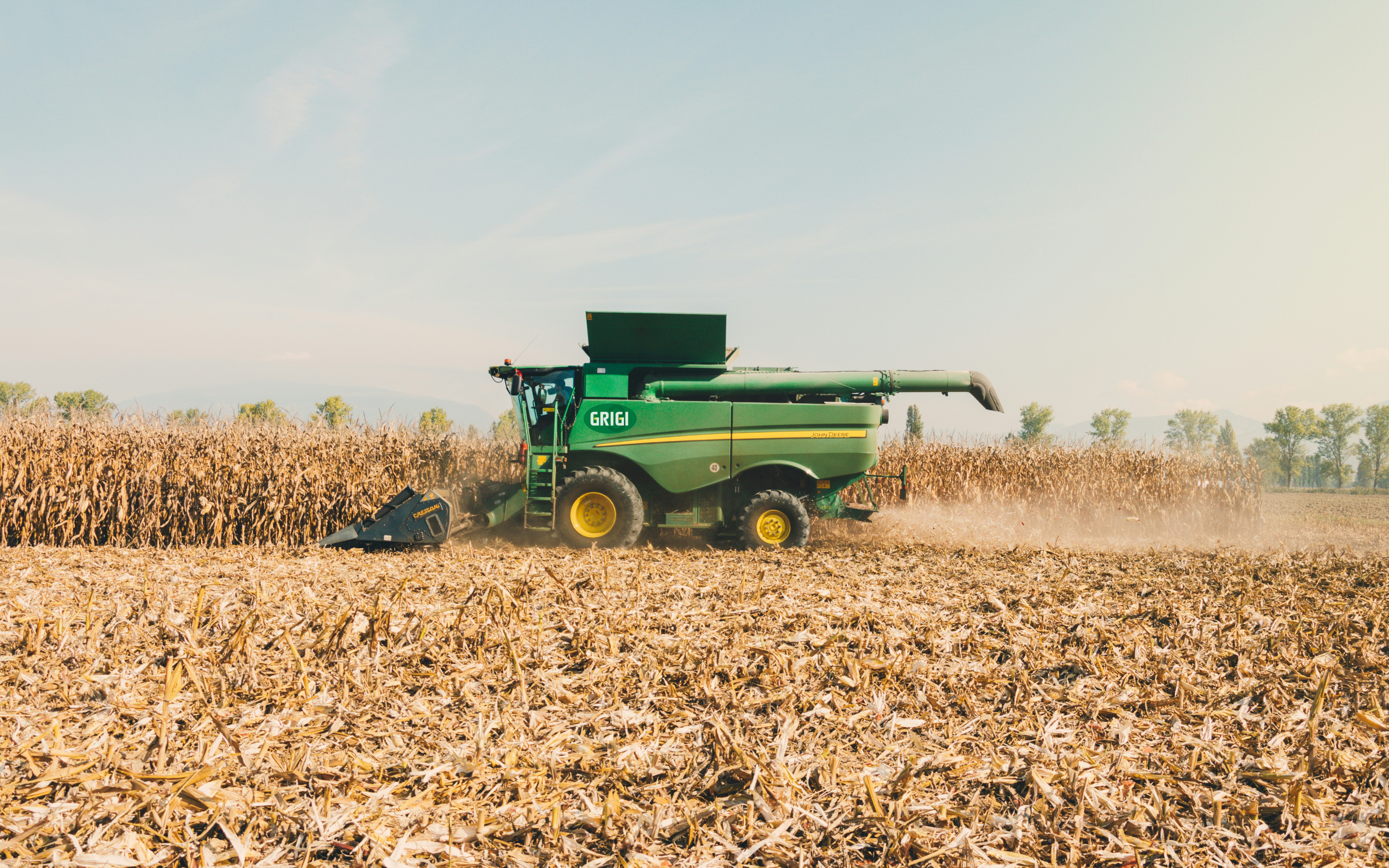
Blockchain for food traceability uses a decentralized, taper-proof digital ledger to record every step of a product’s journey throughout the supply chain. Where traditional systems use paper-based processes, spreadsheets, or fragmented databases that are far more compromisable, blockchain is instead able to create a unified digital “paper trail” where each process a product undergoes, like a handoff from farmer to processor to retailer, is logged into a real-time unchangeable entry. This operation goes through several interconnected components, a ledger forms a foundation, this contains timestamped information with encrypted data blocks chronologically linked and a smart contract. This automates transactions, shipments, compliance checks based on pre-defined events (food safety standards, payment to supplier upon delivery, etc.). Food supply chain participants that have role-specific applications are able to interact with this blockchain based on their role permissions that can showcase record product origins, processing details, certifications, and real-time transport conditions all by scanning a simple printed QR code on a packaged product.

- Walmart
- Walmart’s use of blockchain for food traceability is one of the most successful deployments within the industry. Beginning with tracking pork in China and mangoes in the U.S., both cases demonstrated a technological potential in rapid traceability and enhanced food safety. In China, the pork project addressed a specific trust issue in the market regarding mislabeling and quality concerns to consumers. By uploading certificates of authenticity to the blockchain, Walmart eliminated problems such as ordinary pork being mislabeled as organic, restoring the trust for Chinese consumers. After this success, in 2018, there had been 18 reported outbreaks in the U.S. containing E.coli in leafy green products where millions of bags of lettuce had to have been removed and Walmart had required all fresh leafy green suppliers to join its blockchain network. Today, this blockchain system tracks many different types of food, going as far into multi-ingredient complex products and also offers a stronger opportunity for faster recalls, better inventory management, and higher quality.
- IBM
- IBM Food Trust is one of the prominent blockchain platforms for food traceability, serving as the pioneer and foundation for several major implementations. Built on Hyperledger Fabric, the platform operates under a permissioned network where authorized participants can share data securely while maintaining privacy and competitive advantages. This same platform also offers a comprehensive functionality that includes tracing for upstream and downstream tracking and certification management for digitized records. Since October of 2018, IBM Food Trust has grown to include major retailers, suppliers, and food companies worldwide.

- Nestlé
- Nestlé can be considered one of the major implementers that partnered with IBM Food Trust’s blockchain food traceability, going across multiple product lines and geographic regions since 2017. Using the technology to give consumers detailed information about product origins all through scanning via QR codes on product packaging. One key project features the Zoégas coffee brand in Sweden, where customers can trace coffee beans back to specific farms in Brazil, Rwanda, and Colombia, viewing data on farmers, harvest times, certifications verified by the Rainforest Alliance.
Back to Blog List




Joshua Viar - Nov. 2, 2025

Back to Blog List
What if you could trace every bite of your food back to its origin? Track it down to the exact farm, country, or fishing boat it came from? These are questions companies need to consider as global supply chains grow increasingly complex. Knowing where our food is sourced from has become surprisingly difficult as outbreaks of contamination within farms, food fraud, and mislabeled products have compromised the public’s trust. Enter blockchain technology. This new innovation, synonymous with cryptocurrency, is now being used to rebuild transparency from the ground up by providing real-time tracking and faster responses when something goes wrong.
Blockchain technology is transforming food traceability by bringing unmatched speed, transparency, and security to the supply chain management. By looking at how the success in implementation of blockchain traceability has been for industry leaders like IBM, Nestlé, and Walmart, it shows that this technology has the potential value that can change the landscape of how food companies can operate in the future. With capabilities of being able to prevent disaster with faster recalls via a quick scan, companies will be able to prevent mass amounts of financial loss. Its ability to reduce tracing time from days to seconds while keeping records “tamper-proof” solves major challenges in food safety, consumer trust, and efficiency. Ultimately, blockchain offers the foundation for a more transparent and trustworthy global food system and as technological expertise expands in society, blockchain will likely shift from a competitive advantage to an industry standard.

- Belski, V., & Taului, D. (ca. 2025). Blockchain in the Food Supply Chain. ScienceSoft.
- https://www.scnsoft.com/blockchain/food-supply-chain
- Daley, S. (2023, March 22). Blockchain for Food: 10 Examples to Know. Built In.
- https://builtin.com/blockchain/food-safety-supply-chain
- IBM. (2021, February 22). Majid Al Futtaim Taps IBM Food Trust to Deliver Food Traceability
- Across Carrefour Stores Using Blockchain Technology. IBM Newsroom. https://newsroom.ibm.com/2021-02-22-Majid-Al-Futtaim-Taps-IBM-Food-Trust-to-Deliver-Food-Traceability-Across-Carrefour-Stores-Using-Blockchain-Technology
- Jones, M. (2020, July 22). Nestlé – why the world’s biggest food company uses blockchain.
- TechHQ. https://techhq.com/news/nestle-why-the-worlds-biggest-food-company-uses-blockchain/
- Lal Patray, C. (2024, November 10). How IBM’s Food Trust Revolutionized Traceability and Built
- Consumer Trust. LinkedIn. https://www.linkedin.com/pulse/how-ibms-food-trust-revolutionized-traceability-built-patary-2pntc
- LF Decentralized Trust. (ca. 2019). How Walmart brought unprecedented transparency to the
- food supply chain with Hyperledger Fabric. Linux Foundation Decentralized Trust. https://www.lfdecentralizedtrust.org/case-studies/walmart-case-study
- Nestlé. (2020, April 6). Nestlé expands blockchain to Zoégas coffee brand. Nestlé Global.
- https://www.nestle.com/media/news/nestle-blockchain-zoegas-coffee-brand
- Pollock, D. (2020, April 15). Nestlé Expands Use Of IBM Food Trust Blockchain To Its Zoégas
- Coffee Brand. Forbes. https://www.forbes.com/sites/darrynpollock/2020/04/15/nestl-expands-use-of-ibm-food-trust-blockchain-to-its-zogas-coffee-brand/
- Smith, M. (2018, September 24). In Wake of Romaine E. coli Scare, Walmart Deploys
- Blockchain to Track Leafy Greens. Walmart. https://corporate.walmart.com/news/2018/09/24/in-wake-of-romaine-e-coli-scare-walmart-deploys-blockchain-to-track-leafy-greens
- TraceX. (2024, March 5). Blockchain For Food Traceability- How Technology Revolutionizes
- Supply Chain Transparency. TraceX Technologies. https://tracextech.com/blockchain-for-food-traceability/

- Enhanced Speed and Efficiency
- The most prominent benefit of incorporating blockchain in food traceability is its unmatched tracking speed. Walmart’s collaboration with IBM Food Trust demonstrates this leap when tracing packaged sliced mangoes that had usually taken a week, but with blockchain it had taken 2.2 seconds. This nearly instant visibility allows companies to respond to safety incidents almost immediately. Beyond single products, Walmart is now able to trace more than 25 food categories from 5 different suppliers; tracing from leafy greens and meat to baby food, pinpointing each ingredient’s source.
- Improved Food Safety and Recall Management
- Blockchain technology enhances food safety by enabling precise, targetable recalls instead of broad and wasteful product removals. When contamination occurs within a supply chain, companies can instantly identify the affected batches and remove only those specific items. This precision reduces food wastes, financial losses, and possible consumer panic. Beyond recalls, blockchain supports real-time monitoring of temperature, humidity, and storage conditions across the supply chain so that products may remain safe and high-quality. Having continuous monitoring over products helps prevent contamination before it can happen rather than having to respond to the problems once they emerge.
- Cost Savings and Operational Efficiency
- As mentioned before, by allowing precise recalls, businesses avoid high costs of removing entire product lines and protect their brand reputation. Automation also cuts administrative expenses by simplifying record-keeping, audits, and compliance reporting. In addition, blockchain streamlines operations by reducing paperwork and duplicates in data entry, while smart contracts handle transactions, payments and verification automatically, rather than having time and money wasted on long manual processes and cutting overall costs.
- Enhanced Consumer Trust and Brand Value
- Allowing for better traceability with blockchain also strengthens consumer trust by offering verified information on origins, quality, sustainability of a product, enhancing a company's optics. According to IBM Institute for Business Value, a survey had conducted that 73% of consumers view traceability as important, and 71% are willing to pay more for brands that provide it. This kind of transparency helps companies stand out more in competitive markets, especially in premium and organic food segments. Having customers to be able to confirm claims themselves like organic certification, fair trade, or sustainable sourcing through blockchain records that can be provided by a QR code on a product, it reinforces brand credibility and justifies higher prices for premium products.

Blockchain for food traceability uses a decentralized, taper-proof digital ledger to record every step of a product’s journey throughout the supply chain. Where traditional systems use paper-based processes, spreadsheets, or fragmented databases that are far more compromisable, blockchain is instead able to create a unified digital “paper trail” where each process a product undergoes, like a handoff from farmer to processor to retailer, is logged into a real-time unchangeable entry. This operation goes through several interconnected components, a ledger forms a foundation, this contains timestamped information with encrypted data blocks chronologically linked and a smart contract. This automates transactions, shipments, compliance checks based on pre-defined events (food safety standards, payment to supplier upon delivery, etc.). Food supply chain participants that have role-specific applications are able to interact with this blockchain based on their role permissions that can showcase record product origins, processing details, certifications, and real-time transport conditions all by scanning a simple printed QR code on a packaged product.


https://unsplash.com/photos/green-and-yellow-heavy-equipment-5ofKC-FQK3Q
- Walmart
- Walmart’s use of blockchain for food traceability is one of the most successful deployments within the industry. Beginning with tracking pork in China and mangoes in the U.S., both cases demonstrated a technological potential in rapid traceability and enhanced food safety. In China, the pork project addressed a specific trust issue in the market regarding mislabeling and quality concerns to consumers. By uploading certificates of authenticity to the blockchain, Walmart eliminated problems such as ordinary pork being mislabeled as organic, restoring the trust for Chinese consumers. After this success, in 2018, there had been 18 reported outbreaks in the U.S. containing E.coli in leafy green products where millions of bags of lettuce had to have been removed and Walmart had required all fresh leafy green suppliers to join its blockchain network. Today, this blockchain system tracks many different types of food, going as far into multi-ingredient complex products and also offers a stronger opportunity for faster recalls, better inventory management, and higher quality.
- IBM
- IBM Food Trust is one of the prominent blockchain platforms for food traceability, serving as the pioneer and foundation for several major implementations. Built on Hyperledger Fabric, the platform operates under a permissioned network where authorized participants can share data securely while maintaining privacy and competitive advantages. This same platform also offers a comprehensive functionality that includes tracing for upstream and downstream tracking and certification management for digitized records. Since October of 2018, IBM Food Trust has grown to include major retailers, suppliers, and food companies worldwide.

- Nestlé
- Nestlé can be considered one of the major implementers that partnered with IBM Food Trust’s blockchain food traceability, going across multiple product lines and geographic regions since 2017. Using the technology to give consumers detailed information about product origins all through scanning via QR codes on product packaging. One key project features the Zoégas coffee brand in Sweden, where customers can trace coffee beans back to specific farms in Brazil, Rwanda, and Colombia, viewing data on farmers, harvest times, certifications verified by the Rainforest Alliance.


Connective.thecompany@gmail.com
125 Bond St, Toronto, ON M5B 1Y2


Joshua Viar - Nov. 2, 2025
Back to Blog List
What if you could trace every bite of your food back to its origin? Track it down to the exact farm, country, or fishing boat it came from? These are questions companies need to consider as global supply chains grow increasingly complex. Knowing where our food is sourced from has become surprisingly difficult as outbreaks of contamination within farms, food fraud, and mislabeled products have compromised the public’s trust. Enter blockchain technology. This new innovation, synonymous with cryptocurrency, is now being used to rebuild transparency from the ground up by providing real-time tracking and faster responses when something goes wrong.
Blockchain technology is transforming food traceability by bringing unmatched speed, transparency, and security to the supply chain management. By looking at how the success in implementation of blockchain traceability has been for industry leaders like IBM, Nestlé, and Walmart, it shows that this technology has the potential value that can change the landscape of how food companies can operate in the future. With capabilities of being able to prevent disaster with faster recalls via a quick scan, companies will be able to prevent mass amounts of financial loss. Its ability to reduce tracing time from days to seconds while keeping records “tamper-proof” solves major challenges in food safety, consumer trust, and efficiency. Ultimately, blockchain offers the foundation for a more transparent and trustworthy global food system and as technological expertise expands in society, blockchain will likely shift from a competitive advantage to an industry standard.
- Belski, V., & Taului, D. (ca. 2025). Blockchain in the Food Supply Chain. ScienceSoft.
- https://www.scnsoft.com/blockchain/food-supply-chain
- Daley, S. (2023, March 22). Blockchain for Food: 10 Examples to Know. Built In.
- https://builtin.com/blockchain/food-safety-supply-chain
- IBM. (2021, February 22). Majid Al Futtaim Taps IBM Food Trust to Deliver Food Traceability
- Across Carrefour Stores Using Blockchain Technology. IBM Newsroom. https://newsroom.ibm.com/2021-02-22-Majid-Al-Futtaim-Taps-IBM-Food-Trust-to-Deliver-Food-Traceability-Across-Carrefour-Stores-Using-Blockchain-Technology
- Jones, M. (2020, July 22). Nestlé – why the world’s biggest food company uses blockchain.
- TechHQ. https://techhq.com/news/nestle-why-the-worlds-biggest-food-company-uses-blockchain/
- Lal Patray, C. (2024, November 10). How IBM’s Food Trust Revolutionized Traceability and Built
- Consumer Trust. LinkedIn. https://www.linkedin.com/pulse/how-ibms-food-trust-revolutionized-traceability-built-patary-2pntc
- LF Decentralized Trust. (ca. 2019). How Walmart brought unprecedented transparency to the
- food supply chain with Hyperledger Fabric. Linux Foundation Decentralized Trust. https://www.lfdecentralizedtrust.org/case-studies/walmart-case-study
- Nestlé. (2020, April 6). Nestlé expands blockchain to Zoégas coffee brand. Nestlé Global.
- https://www.nestle.com/media/news/nestle-blockchain-zoegas-coffee-brand
- Pollock, D. (2020, April 15). Nestlé Expands Use Of IBM Food Trust Blockchain To Its Zoégas
- Coffee Brand. Forbes. https://www.forbes.com/sites/darrynpollock/2020/04/15/nestl-expands-use-of-ibm-food-trust-blockchain-to-its-zogas-coffee-brand/
- Smith, M. (2018, September 24). In Wake of Romaine E. coli Scare, Walmart Deploys
- Blockchain to Track Leafy Greens. Walmart. https://corporate.walmart.com/news/2018/09/24/in-wake-of-romaine-e-coli-scare-walmart-deploys-blockchain-to-track-leafy-greens
- TraceX. (2024, March 5). Blockchain For Food Traceability- How Technology Revolutionizes
- Supply Chain Transparency. TraceX Technologies. https://tracextech.com/blockchain-for-food-traceability/
- Enhanced Speed and Efficiency
- The most prominent benefit of incorporating blockchain in food traceability is its unmatched tracking speed. Walmart’s collaboration with IBM Food Trust demonstrates this leap when tracing packaged sliced mangoes that had usually taken a week, but with blockchain it had taken 2.2 seconds. This nearly instant visibility allows companies to respond to safety incidents almost immediately. Beyond single products, Walmart is now able to trace more than 25 food categories from 5 different suppliers; tracing from leafy greens and meat to baby food, pinpointing each ingredient’s source.
- Improved Food Safety and Recall Management
- Blockchain technology enhances food safety by enabling precise, targetable recalls instead of broad and wasteful product removals. When contamination occurs within a supply chain, companies can instantly identify the affected batches and remove only those specific items. This precision reduces food wastes, financial losses, and possible consumer panic. Beyond recalls, blockchain supports real-time monitoring of temperature, humidity, and storage conditions across the supply chain so that products may remain safe and high-quality. Having continuous monitoring over products helps prevent contamination before it can happen rather than having to respond to the problems once they emerge.
- Cost Savings and Operational Efficiency
- As mentioned before, by allowing precise recalls, businesses avoid high costs of removing entire product lines and protect their brand reputation. Automation also cuts administrative expenses by simplifying record-keeping, audits, and compliance reporting. In addition, blockchain streamlines operations by reducing paperwork and duplicates in data entry, while smart contracts handle transactions, payments and verification automatically, rather than having time and money wasted on long manual processes and cutting overall costs.
- Enhanced Consumer Trust and Brand Value
- Allowing for better traceability with blockchain also strengthens consumer trust by offering verified information on origins, quality, sustainability of a product, enhancing a company's optics. According to IBM Institute for Business Value, a survey had conducted that 73% of consumers view traceability as important, and 71% are willing to pay more for brands that provide it. This kind of transparency helps companies stand out more in competitive markets, especially in premium and organic food segments. Having customers to be able to confirm claims themselves like organic certification, fair trade, or sustainable sourcing through blockchain records that can be provided by a QR code on a product, it reinforces brand credibility and justifies higher prices for premium products.

Blockchain for food traceability uses a decentralized, taper-proof digital ledger to record every step of a product’s journey throughout the supply chain. Where traditional systems use paper-based processes, spreadsheets, or fragmented databases that are far more compromisable, blockchain is instead able to create a unified digital “paper trail” where each process a product undergoes, like a handoff from farmer to processor to retailer, is logged into a real-time unchangeable entry. This operation goes through several interconnected components, a ledger forms a foundation, this contains timestamped information with encrypted data blocks chronologically linked and a smart contract. This automates transactions, shipments, compliance checks based on pre-defined events (food safety standards, payment to supplier upon delivery, etc.). Food supply chain participants that have role-specific applications are able to interact with this blockchain based on their role permissions that can showcase record product origins, processing details, certifications, and real-time transport conditions all by scanning a simple printed QR code on a packaged product.


https://unsplash.com/photos/green-and-yellow-heavy-equipment-5ofKC-FQK3Q
- Walmart
- Walmart’s use of blockchain for food traceability is one of the most successful deployments within the industry. Beginning with tracking pork in China and mangoes in the U.S., both cases demonstrated a technological potential in rapid traceability and enhanced food safety. In China, the pork project addressed a specific trust issue in the market regarding mislabeling and quality concerns to consumers. By uploading certificates of authenticity to the blockchain, Walmart eliminated problems such as ordinary pork being mislabeled as organic, restoring the trust for Chinese consumers. After this success, in 2018, there had been 18 reported outbreaks in the U.S. containing E.coli in leafy green products where millions of bags of lettuce had to have been removed and Walmart had required all fresh leafy green suppliers to join its blockchain network. Today, this blockchain system tracks many different types of food, going as far into multi-ingredient complex products and also offers a stronger opportunity for faster recalls, better inventory management, and higher quality.
- IBM
- IBM Food Trust is one of the prominent blockchain platforms for food traceability, serving as the pioneer and foundation for several major implementations. Built on Hyperledger Fabric, the platform operates under a permissioned network where authorized participants can share data securely while maintaining privacy and competitive advantages. This same platform also offers a comprehensive functionality that includes tracing for upstream and downstream tracking and certification management for digitized records. Since October of 2018, IBM Food Trust has grown to include major retailers, suppliers, and food companies worldwide.

- Nestlé
- Nestlé can be considered one of the major implementers that partnered with IBM Food Trust’s blockchain food traceability, going across multiple product lines and geographic regions since 2017. Using the technology to give consumers detailed information about product origins all through scanning via QR codes on product packaging. One key project features the Zoégas coffee brand in Sweden, where customers can trace coffee beans back to specific farms in Brazil, Rwanda, and Colombia, viewing data on farmers, harvest times, certifications verified by the Rainforest Alliance.




Connective.thecompany@gmail.com
125 Bond St, Toronto, ON M5B 1Y2







Joshua Viar - Nov. 2, 2025
Back to Blog List
What if you could trace every bite of your food back to its origin? Track it down to the exact farm, country, or fishing boat it came from? These are questions companies need to consider as global supply chains grow increasingly complex. Knowing where our food is sourced from has become surprisingly difficult as outbreaks of contamination within farms, food fraud, and mislabeled products have compromised the public’s trust. Enter blockchain technology. This new innovation, synonymous with cryptocurrency, is now being used to rebuild transparency from the ground up by providing real-time tracking and faster responses when something goes wrong.
Blockchain technology is transforming food traceability by bringing unmatched speed, transparency, and security to the supply chain management. By looking at how the success in implementation of blockchain traceability has been for industry leaders like IBM, Nestlé, and Walmart, it shows that this technology has the potential value that can change the landscape of how food companies can operate in the future. With capabilities of being able to prevent disaster with faster recalls via a quick scan, companies will be able to prevent mass amounts of financial loss. Its ability to reduce tracing time from days to seconds while keeping records “tamper-proof” solves major challenges in food safety, consumer trust, and efficiency. Ultimately, blockchain offers the foundation for a more transparent and trustworthy global food system and as technological expertise expands in society, blockchain will likely shift from a competitive advantage to an industry standard.
- Belski, V., & Taului, D. (ca. 2025). Blockchain in the Food Supply Chain. ScienceSoft.
- https://www.scnsoft.com/blockchain/food-supply-chain
- Daley, S. (2023, March 22). Blockchain for Food: 10 Examples to Know. Built In.
- https://builtin.com/blockchain/food-safety-supply-chain
- IBM. (2021, February 22). Majid Al Futtaim Taps IBM Food Trust to Deliver Food Traceability
- Across Carrefour Stores Using Blockchain Technology. IBM Newsroom. https://newsroom.ibm.com/2021-02-22-Majid-Al-Futtaim-Taps-IBM-Food-Trust-to-Deliver-Food-Traceability-Across-Carrefour-Stores-Using-Blockchain-Technology
- Jones, M. (2020, July 22). Nestlé – why the world’s biggest food company uses blockchain.
- TechHQ. https://techhq.com/news/nestle-why-the-worlds-biggest-food-company-uses-blockchain/
- Lal Patray, C. (2024, November 10). How IBM’s Food Trust Revolutionized Traceability and Built
- Consumer Trust. LinkedIn. https://www.linkedin.com/pulse/how-ibms-food-trust-revolutionized-traceability-built-patary-2pntc
- LF Decentralized Trust. (ca. 2019). How Walmart brought unprecedented transparency to the
- food supply chain with Hyperledger Fabric. Linux Foundation Decentralized Trust. https://www.lfdecentralizedtrust.org/case-studies/walmart-case-study
- Nestlé. (2020, April 6). Nestlé expands blockchain to Zoégas coffee brand. Nestlé Global.
- https://www.nestle.com/media/news/nestle-blockchain-zoegas-coffee-brand
- Pollock, D. (2020, April 15). Nestlé Expands Use Of IBM Food Trust Blockchain To Its Zoégas
- Coffee Brand. Forbes. https://www.forbes.com/sites/darrynpollock/2020/04/15/nestl-expands-use-of-ibm-food-trust-blockchain-to-its-zogas-coffee-brand/
- Smith, M. (2018, September 24). In Wake of Romaine E. coli Scare, Walmart Deploys
- Blockchain to Track Leafy Greens. Walmart. https://corporate.walmart.com/news/2018/09/24/in-wake-of-romaine-e-coli-scare-walmart-deploys-blockchain-to-track-leafy-greens
- TraceX. (2024, March 5). Blockchain For Food Traceability- How Technology Revolutionizes
- Supply Chain Transparency. TraceX Technologies. https://tracextech.com/blockchain-for-food-traceability/
- Enhanced Speed and Efficiency
- The most prominent benefit of incorporating blockchain in food traceability is its unmatched tracking speed. Walmart’s collaboration with IBM Food Trust demonstrates this leap when tracing packaged sliced mangoes that had usually taken a week, but with blockchain it had taken 2.2 seconds. This nearly instant visibility allows companies to respond to safety incidents almost immediately. Beyond single products, Walmart is now able to trace more than 25 food categories from 5 different suppliers; tracing from leafy greens and meat to baby food, pinpointing each ingredient’s source.
- Improved Food Safety and Recall Management
- Blockchain technology enhances food safety by enabling precise, targetable recalls instead of broad and wasteful product removals. When contamination occurs within a supply chain, companies can instantly identify the affected batches and remove only those specific items. This precision reduces food wastes, financial losses, and possible consumer panic. Beyond recalls, blockchain supports real-time monitoring of temperature, humidity, and storage conditions across the supply chain so that products may remain safe and high-quality. Having continuous monitoring over products helps prevent contamination before it can happen rather than having to respond to the problems once they emerge.
- Cost Savings and Operational Efficiency
- As mentioned before, by allowing precise recalls, businesses avoid high costs of removing entire product lines and protect their brand reputation. Automation also cuts administrative expenses by simplifying record-keeping, audits, and compliance reporting. In addition, blockchain streamlines operations by reducing paperwork and duplicates in data entry, while smart contracts handle transactions, payments and verification automatically, rather than having time and money wasted on long manual processes and cutting overall costs.
- Enhanced Consumer Trust and Brand Value
- Allowing for better traceability with blockchain also strengthens consumer trust by offering verified information on origins, quality, sustainability of a product, enhancing a company's optics. According to IBM Institute for Business Value, a survey had conducted that 73% of consumers view traceability as important, and 71% are willing to pay more for brands that provide it. This kind of transparency helps companies stand out more in competitive markets, especially in premium and organic food segments. Having customers to be able to confirm claims themselves like organic certification, fair trade, or sustainable sourcing through blockchain records that can be provided by a QR code on a product, it reinforces brand credibility and justifies higher prices for premium products.
Blockchain for food traceability uses a decentralized, taper-proof digital ledger to record every step of a product’s journey throughout the supply chain. Where traditional systems use paper-based processes, spreadsheets, or fragmented databases that are far more compromisable, blockchain is instead able to create a unified digital “paper trail” where each process a product undergoes, like a handoff from farmer to processor to retailer, is logged into a real-time unchangeable entry. This operation goes through several interconnected components, a ledger forms a foundation, this contains timestamped information with encrypted data blocks chronologically linked and a smart contract. This automates transactions, shipments, compliance checks based on pre-defined events (food safety standards, payment to supplier upon delivery, etc.). Food supply chain participants that have role-specific applications are able to interact with this blockchain based on their role permissions that can showcase record product origins, processing details, certifications, and real-time transport conditions all by scanning a simple printed QR code on a packaged product.
https://unsplash.com/photos/green-and-yellow-heavy-equipment-5ofKC-FQK3Q
- Walmart
- Walmart’s use of blockchain for food traceability is one of the most successful deployments within the industry. Beginning with tracking pork in China and mangoes in the U.S., both cases demonstrated a technological potential in rapid traceability and enhanced food safety. In China, the pork project addressed a specific trust issue in the market regarding mislabeling and quality concerns to consumers. By uploading certificates of authenticity to the blockchain, Walmart eliminated problems such as ordinary pork being mislabeled as organic, restoring the trust for Chinese consumers. After this success, in 2018, there had been 18 reported outbreaks in the U.S. containing E.coli in leafy green products where millions of bags of lettuce had to have been removed and Walmart had required all fresh leafy green suppliers to join its blockchain network. Today, this blockchain system tracks many different types of food, going as far into multi-ingredient complex products and also offers a stronger opportunity for faster recalls, better inventory management, and higher quality.
- IBM
- IBM Food Trust is one of the prominent blockchain platforms for food traceability, serving as the pioneer and foundation for several major implementations. Built on Hyperledger Fabric, the platform operates under a permissioned network where authorized participants can share data securely while maintaining privacy and competitive advantages. This same platform also offers a comprehensive functionality that includes tracing for upstream and downstream tracking and certification management for digitized records. Since October of 2018, IBM Food Trust has grown to include major retailers, suppliers, and food companies worldwide.
- Nestlé
- Nestlé can be considered one of the major implementers that partnered with IBM Food Trust’s blockchain food traceability, going across multiple product lines and geographic regions since 2017. Using the technology to give consumers detailed information about product origins all through scanning via QR codes on product packaging. One key project features the Zoégas coffee brand in Sweden, where customers can trace coffee beans back to specific farms in Brazil, Rwanda, and Colombia, viewing data on farmers, harvest times, certifications verified by the Rainforest Alliance.




Connective.thecompany@gmail.com
125 Bond St, Toronto, ON M5B 1Y2

